

Programme
The EIT CDT in Fundamentals of AI based at the University of Oxford is part of a strategic collaboration between the University and the Ellison Institute of Technology. It will support up to 100 doctoral researchers to undertake foundational research in the underpinning theory and methods of Artificial Intelligence that have the potential to have a transformative impact on the field of artificial intelligence itself and across a range of humane themes associated with the EIT.
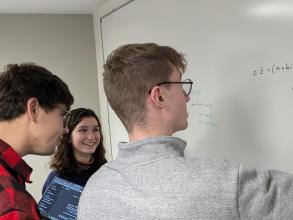
The programme offers students an exceptional opportunity to engage with the forefront of pioneering AI research while developing valuable business and transferable skills with mentorship from industry leaders. Participants will undertake a substantial, intellectually rigorous, and original research project that not only advances knowledge with real-world impact but also equips them for impactful careers in academia, industry, and beyond, leading to the award of a DPhil.
Key topics and themes will focus on fundamentals of artificial intelligence, computational statistics and machine learning. Training will begin with an immersive module in software engineering that will lay the foundation for a year-long, team-based open source software development project.
The CDT directors will also meet with students individually during induction and throughout the first year to create personal development plans to help identify training which would be of particular benefit.
Group Projects
- Students will be put into teams to consider a substantive AI problem that you will work on together throughout the first year. This will be a chance for you to engage with EIT early in your DPhil.
Rotation Projects
- Students will undertake two individual rotation projects in year 1 with time set aside to keep the group projects going. These will be carried out under the supervision of academics from the supervisor pool but students are encouraged work with additional co-supervisors from EIT. Students may also work with other co-supervisors at the university who are not in the supervision pool. During this time, students will be based in the home department of the mini-project supervisors.
Towards the end of the first year, students will select a DPhil research project which may be a continuation of one of the short rotation projects, a topic from the group projects or something entirely different but we will guide you through that process.


EIT Leadership and Innovation Programming Training
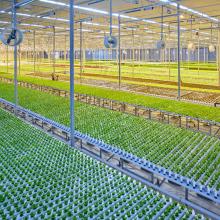
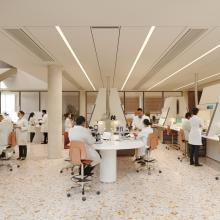
Students in the CDT will also have access to EIT leadership and innovation training to support them through to graduation and beyond. With a core focus on skills building, this programming is designed to develop leadership in the context of science and technology. The programme encourages students to think critically about their role as future scientific leaders and innovators.
Through a combination of expert talks, practical workshops, and peer discussions, students will have the opportunity to learn directly from leading entrepreneurs and innovators representing a diverse range of sectors.
MPLS Doctoral Training Centre Research and Professional Skills Training
Studying for a DPhil requires an aptitude for original, independent and critical thinking, as well as the ability to write papers, present data and manage projects. The Research and Professional Skills programme, which runs throughout the four years at the Doctoral Training Centre, is designed not only to equip students with the necessary skillset to carry out their research at Oxford but also provides an opportunity to develop personal transferable skills. Through a series of lectures and seminars students will be able to improve their competence and confidence as researchers. These qualities are not only key in research but equally important in many careers.
Research and Professional Skills training covers scientific methodology, public engagement with science, reading scientific literature across disciplines, scientific writing, poster production, publishing a research paper, presentation and communication skills, management skills, managing your DTC DPhil, IP and commercialisation of research, research ethics, introduction to entrepreneurship, interview techniques and career development.